
Agriculture Technology Companies: How to Pick the Right Tools (and Avoid Wasting Money)
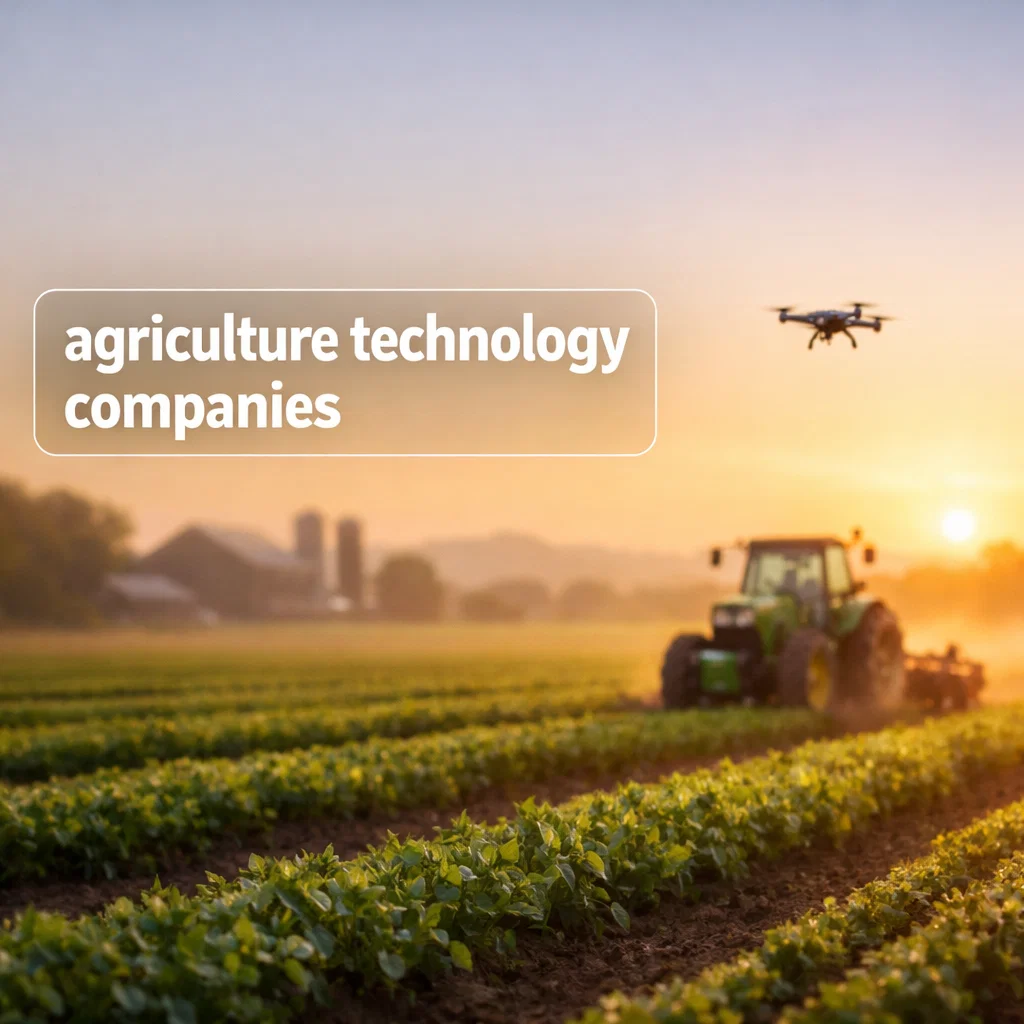
If you’ve ever bought a “smart” tool that looked amazing in a demo but didn’t fit your daily work… you already understand the real challenge with agriculture technology companies.
The tech isn’t the hard part. The hard part is:
- does it work in real fields,
- does it save time or money fast enough,
- and will it still be useful when the season gets hectic?
In this guide, I’m keeping things practical. I’ll explain what agriculture technology companies actually offer today, how to compare them (without getting lost in buzzwords), and how to choose the right solution for your farm, agribusiness, or supply chain—using simple, real-life checks you can do.
What Are Agriculture Technology Companies (in plain words)?
Agriculture technology companies build products and services that help agriculture run better—more efficient, more predictable, and less wasteful.
They usually fall into a few buckets:
- tools that help you decide (what to plant, when to irrigate, what to spray, when to harvest)
- tools that help you do the work (automation, machinery, robotics)
- tools that help you buy and sell (marketplaces, pricing, logistics, payments)
- tools that help you prove and report (traceability, sustainability reporting, MRV)
A lot of this sits under “digital agriculture,” which is basically using digital tools and systems to give farmers and the supply chain timely information and services.
Why these companies matter more now (and why buyers are pickier)
Farming runs on thin margins. And the pressure points are getting more intense:
- Water is a big one: agriculture is often cited as using roughly 70% of freshwater withdrawals globally.
- Weather swings make timing harder.
- Labor is expensive (and sometimes simply not available).
- Buyers want more proof: where food came from, how it was produced, and whether claims are measurable.
At the same time, funding and growth expectations have become more realistic. Recent investment reporting shows agrifood tech still attracts large funding overall, but the market rewards categories with clearer ROI and practical adoption (like robotics/mechanization and bio-based areas).
So the best agriculture technology companies aren’t just “innovative.” They’re useful.
The main categories of Agriculture Technology Companies (with real-life examples)
1) Precision farming and decision-support (turning data into one clear action)
These companies help you answer questions like:
- “Do I irrigate today or wait?”
- “Which block needs scouting first?”
- “Is this pest pressure real or just a bad patch?”
A common problem: tools show too much data but don’t help you decide. The best decision-support tools reduce noise and give simple, confident recommendations—especially when connectivity is weak, which is still a major adoption barrier in many rural areas.
Real-life tip:
If a tool can’t work when signal drops (or it turns into a loading screen), it’s not “farm-ready.” Always ask: What works offline? What syncs later?
2) Automation and robotics (replacing one painful task at a time)
Robotics works best when it replaces one repetitive job:
- spot weeding
- precision spraying
- scouting and monitoring
- moving loads around the farm
Why “one job” matters: farms don’t need a robot that does everything. They need a machine that does one thing reliably, every day, with less labor stress.
Investment trends also show this area has been gaining attention because the value is easy to explain: less labor cost, more consistency.
Real-life tip:
When you evaluate automation, don’t start with specs. Start with:
- How many labor hours does this replace weekly?
- What happens when it breaks mid-season?
- Who repairs it, and how fast?
3) Biologicals and smarter inputs (working with biology, not just chemistry)
These agriculture technology companies focus on:
- microbial products
- biostimulants
- bio-based crop protection
- seed treatments and coatings
The big win here is better resilience and efficiency—but results can vary depending on soil, weather, and how the product is applied.
Real-life tip:
Never judge biological products from one trial only. Ask for results across different conditions—and ask what management practices make the product work best (timing, moisture, tank mix rules, etc.).
4) Irrigation and water intelligence (not just sensors—clear scheduling)
Water tools are moving from “measurement” to “decision.”
Since agriculture represents a major share of freshwater withdrawals, even small efficiency gains are valuable at scale.
The best irrigation platforms combine:
- soil/crop data
- weather forecasting
- crop stage info
…and turn it into a schedule you can follow without guesswork.
Real-life tip:
Ask the company: “Show me how your recommendation changes at different crop stages.” If it’s the same advice all season, it’s probably too generic.
5) Farm management software and interoperability (getting tools to talk to each other)
This is where things get messy: one farm can easily have 5–10 tools that don’t connect well.
Interoperability matters. For machinery communication, there are standards like ISO 11783 (often called ISOBUS) that support equipment communication and data exchange.
Real-life tip:
Before you buy, ask:
- “Can I export my data?”
- “What formats?”
- “Does it integrate with my equipment/screens?”
If they dodge these questions, that’s a warning sign.
6) Marketplaces, logistics, and payments (selling smarter, getting paid faster)
Not all innovation happens in the field. Some agriculture technology companies improve:
- price discovery
- logistics planning
- quality grading
- faster payments and financing
These tools succeed when they remove friction. If a platform adds extra steps or doesn’t bring real buyers/sellers, it becomes another unused login.
Real-life tip:
If a marketplace can’t prove activity (buyers + sellers + volume), treat it like a pilot—not a long-term dependency.
7) Traceability + compliance tools (proof without paperwork hell)
More buyers want visibility into:
- where products came from
- how they were handled
- whether certain standards were met
This category includes:
- batch tracking
- digital recordkeeping
- audit support
- automated compliance reporting
Real-life tip:
The best systems don’t demand more manual work. They capture data as a by-product of what you’re already doing (invoices, deliveries, applications, etc.).
8) MRV and sustainability measurement (turning practices into verified proof)
MRV stands for measurement, reporting, verification. This shows up in:
- soil carbon projects
- sustainability reporting
- supply chain emission tracking
There are formal approaches and protocols for soil carbon MRV in agricultural landscapes.
There’s also ongoing real-world work on building MRV pipelines at scale (with uncertainty handled properly).
Real-life tip:
For anything MRV-related, always ask:
- “What exactly is measured vs modeled?”
- “How often is it measured?”
- “What happens if results vary year to year?”
How to choose the best Agriculture Technology Companies (my simple process)
Here’s how I’d do it if I wanted results, not stress.
Step 1: Start with one expensive problem
Pick ONE pain point, like:
- too much water waste
- labor shortages for scouting
- inconsistent spray outcomes
- recordkeeping overload
If you try to “digitize the whole farm” at once, you’ll quit halfway.
Step 2: Write your “before” numbers (super simple)
Before you test anything, write down:
- hours spent per week
- average input use
- known losses (disease, pests, quality rejects)
- downtime costs
You don’t need perfect accounting. You just need a baseline.
Step 3: Run a small pilot (one block, one barn, one workflow)
A pilot should be:
- limited area
- limited time
- clear success metric
Example: “If this irrigation tool reduces watering events without yield loss, it stays.”
Step 4: Ask the 5 questions most people skip
- What works offline?
- Who supports me during peak season?
- Can I export my data, anytime? (no hostage situation)
- Does it integrate with my machines/tools?
- What’s the fastest realistic ROI scenario?
Step 5: Check data privacy and fairness (quick but important)
Farm data is valuable. Look for clear privacy and transparency practices. There are established data privacy/security principles used in the ag space, and some providers align with published “core principles.”
Real-life tip:
If the contract says they can “share data with partners” and doesn’t explain how, push back.
Pricing models: subscription vs pay-per-use vs outcome-based (how to compare fast)
Most agriculture technology companies price one of these ways:
Subscription
Best for tools used continuously (farm management, decision support, monitoring).
Watch out for: paying year-round for a tool you only use in-season.
Pay-per-use
Best for services like scans, reports, audits, or inspections.
Watch out for: costs creeping up when usage grows.
Outcome-based
Best when results are measurable (like verified savings or performance).
Watch out for: unclear measurement rules.
Real-life tip:
If they promise “big yield gains” but can’t show how they measure it, don’t sign long contracts.
Red flags (how people get burned)
Here are the common traps I see people fall into with agriculture technology companies:
- Too many dashboards, not enough decisions
- No support plan (everything breaks at the worst time)
- Locked data (you can’t export cleanly)
- Overpromising (especially with outcomes that depend on weather)
- Heavy hardware + weak service (repairs, maintenance, calibration ignored)
- Connectivity blind spots (tools assume perfect internet everywhere)
A small list of examples (not a ranking—just to show what “categories” look like)
I’m not doing a giant list because lists go outdated fast. But here are examples from widely circulated industry roundups and reports so you can see the variety of agriculture technology companies out there:
- Sustainability + MRV: Indigo Ag, Agreena
- Automation/robotics: ecoRobotix; Monarch Tractor; Burro
- On-farm decision support / sensing: Arable
- Controlled environment examples included in public reports: Gotham Greens
If you want, tell me your niche (crops, livestock, irrigation, supply chain), and I’ll suggest the best category match and what features matter most—without turning it into a boring list.
Frequently Asked Questions (FAQ)
1) What do agriculture technology companies actually sell?
Usually software, sensors, automation tools, input innovations (like biologicals), marketplaces, or reporting tools that help farming and the supply chain run better.
2) How do I know if a tool will work on my farm?
Run a pilot on one block/workflow, track a simple “before vs after,” and check offline function and in-season support.
3) What’s the biggest mistake people make when buying agtech?
Buying a tool for features instead of buying it for a clear problem (time saved, inputs reduced, fewer losses).
4) Do I need perfect internet to use modern ag tools?
Not always, but connectivity is still a real barrier. Tools that work offline and sync later are usually easier to adopt.
5) Why does “integration” matter so much?
Because farms use mixed equipment and multiple apps. Standards like ISO 11783 (ISOBUS) help equipment communicate, but software integration still needs checking before you buy.
6) Are MRV tools worth it?
They can be—if the methodology is clear. Ask what’s measured vs modeled, how often verification happens, and what uncertainty looks like.
7) What questions should I ask before signing a contract?
Ask about offline use, support response time, data export, integration, pricing terms, and how outcomes are measured (if outcome-based).
8) What category is growing fastest right now?
Recent investment reporting suggests practical, ROI-clear categories like robotics/mechanization and certain bio-based areas have gained attention compared to hype-heavy models.


